
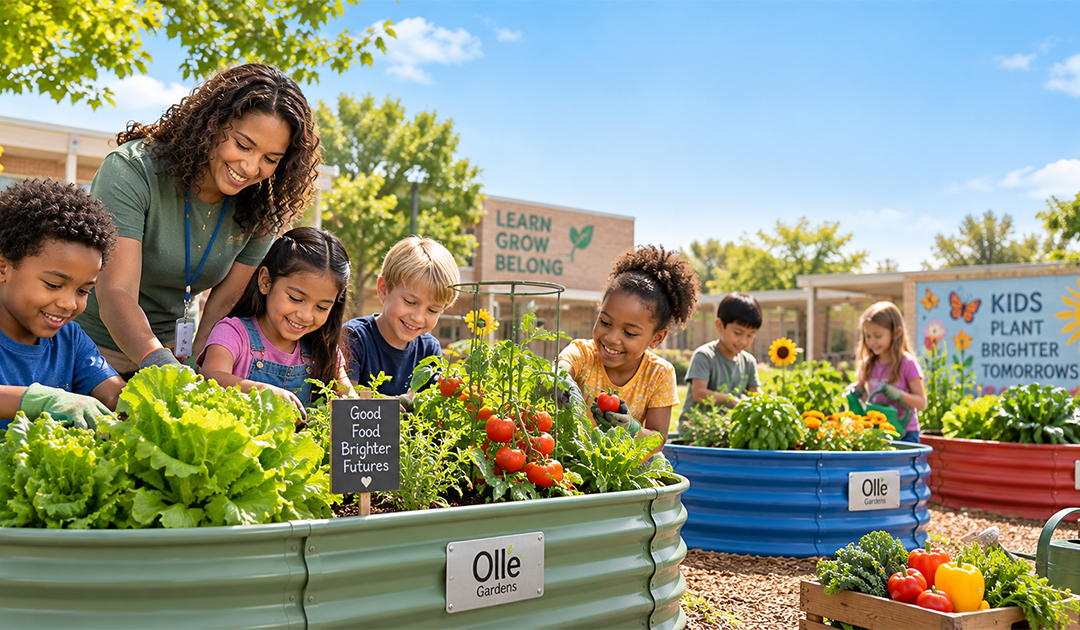
Why School Gardens Matter
Imagine a classroom where students can touch the soil, plant a seed, observe its first leaves, measure its growth, harvest fresh vegetables, and eventually taste something they helped grow.
That classroom is a school garden.
School gardens transform unused outdoor spaces into living classrooms where students can explore science, nutrition, mathematics, environmental studies, and other subjects through real-world experiences.
The benefits can extend far beyond learning how to grow vegetables. Garden-based education can help students develop healthier attitudes toward food, practice teamwork, learn responsibility, connect with nature, and understand where their food comes from.
The Centers for Disease Control and Prevention notes that school garden programs can increase students' nutrition knowledge, willingness to try fruits and vegetables, and positive attitudes toward fruits and vegetables. Gardens can also be incorporated into lessons in subjects such as math, science, history, and language arts.
For schools searching for new ways to make education more interactive, a garden can become one of the most versatile learning spaces on campus.
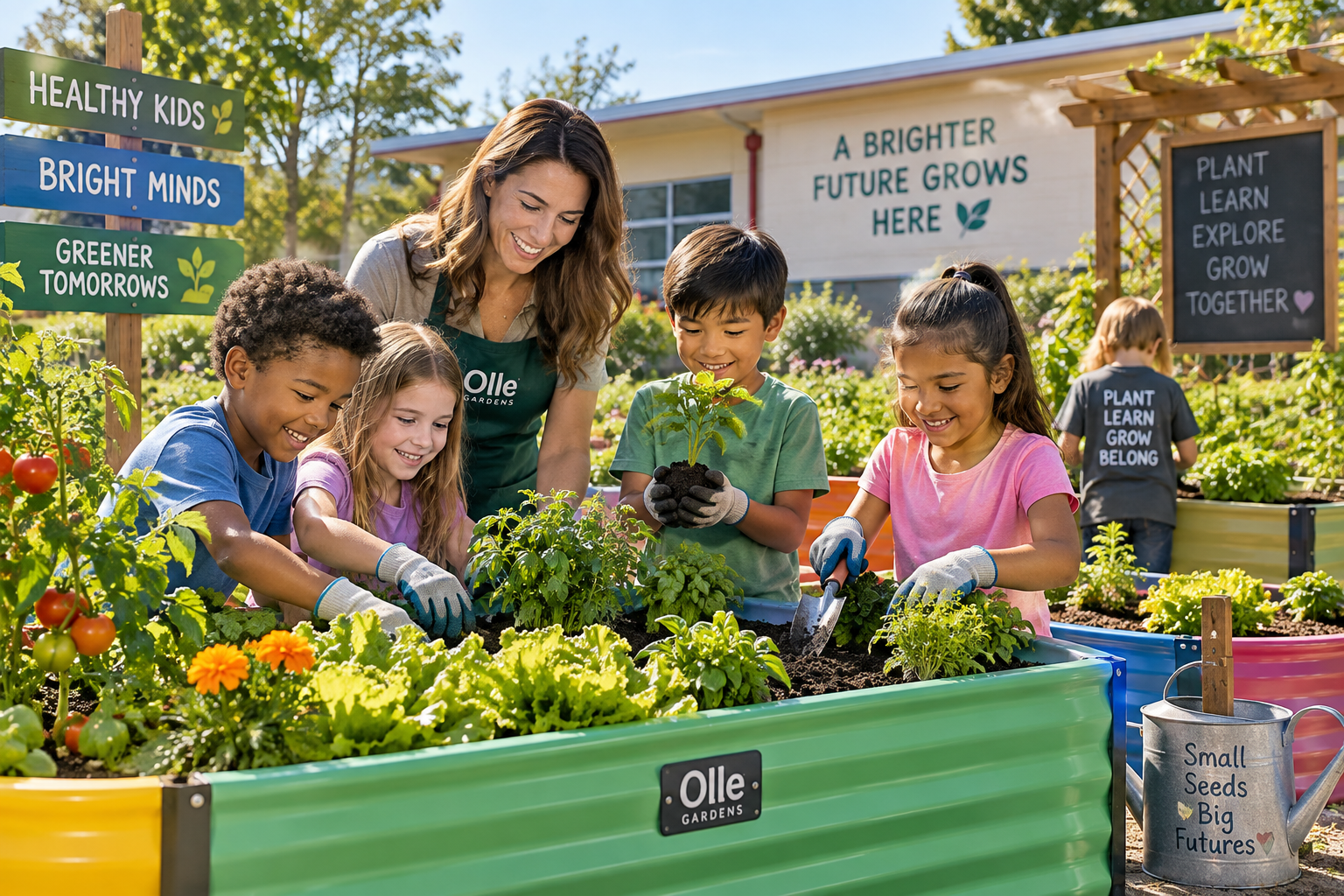
1. School Gardens Create Hands-On Learning Opportunities
One of the greatest benefits of a school garden is its ability to take lessons out of textbooks and put them directly into students' hands.
Instead of only reading about plant biology, students can plant a seed and observe germination.
Instead of simply learning measurements from a worksheet, students can measure garden beds, calculate planting distances, track plant growth, and compare results.
A garden can support lessons in:
Science: Plant biology, ecosystems, insects, pollination, soil health, weather, photosynthesis, and the life cycle of plants.
Mathematics: Measuring garden beds, calculating area and perimeter, counting seeds, creating graphs, estimating harvests, and tracking plant growth.
Language Arts: Keeping garden journals, writing observations, researching plants, creating presentations, and developing gardening instructions.
Nutrition: Identifying vegetables, learning how food grows, understanding healthy food choices, and discovering how fresh produce can become part of a balanced diet.
Environmental Studies: Composting, water conservation, biodiversity, soil conservation, beneficial insects, pollinators, and sustainable gardening.
Research reviewing school garden programs found evidence suggesting garden-based learning may positively influence both academic and dietary outcomes, although researchers also noted that additional high-quality studies are needed.
A garden doesn't have to replace classroom instruction.
It can bring classroom instruction to life.
2. Gardens Help Students Understand Where Food Comes From
For many children, food begins at the grocery store.
A school garden provides a very different perspective.
Students get to experience the journey from:
Seed → Soil → Plant → Harvest → Plate
They begin to understand that tomatoes, lettuce, carrots, peppers, herbs, and other foods require soil, water, sunlight, nutrients, time, and care.
This connection can create a greater appreciation for agriculture and the people who grow our food.
It can also introduce students to important conversations about food systems, farming, sustainability, food waste, and access to nutritious foods.
USDA describes school gardens as tools schools have used for more than a century to establish healthy eating habits, support classroom education, and promote community inclusion.
3. School Gardens Encourage Healthier Eating
Something interesting can happen when a child grows a vegetable themselves:
They may become more interested in tasting it.
A student who might normally avoid lettuce, tomatoes, carrots, or herbs may feel differently after spending weeks watching those plants grow.
School gardening programs have been associated with increased nutrition knowledge, greater willingness to try fruits and vegetables, and more positive attitudes toward these foods.
This makes gardening a valuable addition to nutrition education.
Students aren't simply being told:
"Vegetables are good for you."
Instead, they participate in growing them.
That experience creates a direct connection between gardening, food, and nutrition.
Depending on school policies and local requirements, produce grown in a school garden may also become part of classroom taste tests, cooking demonstrations, or other nutrition-learning activities.

4. Gardening Teaches Responsibility
Plants need consistent care.
They don't know that it's Saturday.
They don't know that students are busy.
And they certainly don't know when someone forgot to water them.
Students quickly discover that a successful garden requires responsibility.
Garden activities can include:
- Watering plants
- Checking soil moisture
- Planting seeds
- Removing weeds
- Monitoring pests
- Adding compost
- Supporting growing plants
- Recording plant growth
- Harvesting vegetables
- Preparing the garden for another season
Students can rotate these responsibilities throughout the growing season.
Over time, they can see the results of their work.
When students care for a tiny seed and eventually harvest food from that same plant, responsibility becomes something they can actually see, touch, and taste.
5. Gardens Encourage Teamwork
A successful school garden is rarely the work of one person.
Students must work together.
One group might prepare the soil while another plants seeds. Other students may water, label plants, record observations, or harvest vegetables.
Students learn that everyone has a role.
Gardening naturally creates opportunities to practice communication, cooperation, problem-solving, patience, and shared responsibility.
These experiences can extend beyond students.
Teachers, administrators, parents, volunteers, local organizations, and community partners can all participate in supporting a school garden.
USDA guidance emphasizes that cooperation among teachers, school personnel, students, parents, volunteers, nonprofit organizations, and community members can be important to sustaining successful school gardens.
A garden can therefore become more than a student project.
It can become a school community project.
6. Gardens Connect Students With Nature
Children spend significant portions of their day indoors.
A garden provides an opportunity to learn outside.
Students can observe butterflies, bees, worms, birds, insects, changing weather, soil conditions, plant growth, and seasonal changes.
Suddenly, concepts such as ecosystems and biodiversity aren't abstract ideas.
They're happening directly in front of them.
Students can investigate questions such as:
Why are bees visiting our flowers?
Why did one plant grow faster than another?
What happens when plants don't receive enough water?
Why are worms important to soil?
Which insects help the garden?
What happens to plants when temperatures change?
A school garden encourages students to become observers, investigators, and problem-solvers.
7. Gardens Make STEM Education More Interactive
A school garden can function as an outdoor STEM laboratory.
Science
Students investigate germination, photosynthesis, soil composition, plant anatomy, insects, weather, and ecosystems.
Technology
Students can use digital thermometers, moisture meters, tablets, cameras, weather tools, and spreadsheets to collect and analyze garden data.
Engineering
Students can explore irrigation systems, trellises, garden layouts, composting systems, plant supports, and methods for conserving water.
Mathematics
Students can calculate planting density, garden-bed dimensions, growth rates, germination percentages, water usage, and harvest totals.
Garden-based STEM activities allow students to ask questions, make predictions, test ideas, record observations, and evaluate results.
And sometimes things don't grow as expected.
That's valuable too.
Students learn to ask:
What happened—and what should we change next time?
That's problem-solving in action.
8. Gardens Can Support Social and Emotional Learning
Gardening requires patience.
A seed planted today isn't a tomato tomorrow.
Students learn that meaningful results often require consistent effort over time.
Gardening activities can also create opportunities for students to practice communication, responsible decision-making, collaboration, goal-setting, and problem-solving.
CDC's Whole School, Whole Community, Whole Child framework recognizes the importance of school environments that support students' physical, social, emotional, and academic development. CDC also specifically identifies giving students opportunities to learn how to grow food through school gardens as a strategy schools can consider.
The garden gives students something they can nurture together—and celebrate together.
9. School Gardens Teach Environmental Responsibility
A garden provides a natural introduction to sustainability.
Students can learn about:
- Composting
- Water conservation
- Soil health
- Pollinators
- Beneficial insects
- Biodiversity
- Food waste
- Seasonal growing
- Organic matter
- Responsible use of natural resources
For example, instead of throwing certain cafeteria fruit and vegetable scraps into the trash, students can learn how appropriate organic materials can become compost.
That compost can eventually help nourish the garden.
Students begin to understand a simple but powerful cycle:
Food → Organic Waste → Compost → Soil → Plants → Food
Lessons like these can help students understand that their everyday choices affect the environment around them.

Start Small and Let the Garden Grow
A school doesn't need to build a huge garden on day one.
Start with a few raised garden beds.
Choose several vegetables or herbs that are appropriate for your climate and growing season.
Give each class or student group responsibilities.
Then allow the program to grow alongside the students.
A simple garden today can eventually become an outdoor classroom used by hundreds of students.
The important thing is planting that first seed.
Bringing Gardening Education to the Next Generation
At the Olle Gardens Learning Center, we believe gardening is about much more than growing plants.
It's about growing knowledge, curiosity, responsibility, healthier habits, and stronger communities.
Our goal is to help schools introduce students to gardening through education, hands-on experiences, and learning opportunities that help children understand where food comes from and how they can participate in growing it.
When students plant something themselves, they aren't simply learning about a garden.
They're participating in one.
And when children are given an opportunity to plant, nurture, observe, and harvest something they helped grow, the lessons can continue long after the growing season ends.
Sow Today. Reap Tomorrow.
Ready to Start a Garden at Your School?
Whether you're a teacher, principal, administrator, parent, PTA member, or community organization, the Olle Gardens Learning Center can help you explore ways to bring gardening education to your students.
Discover school garden options, educational resources, and raised garden bed solutions designed to help turn outdoor spaces into places where students can learn and grow.